
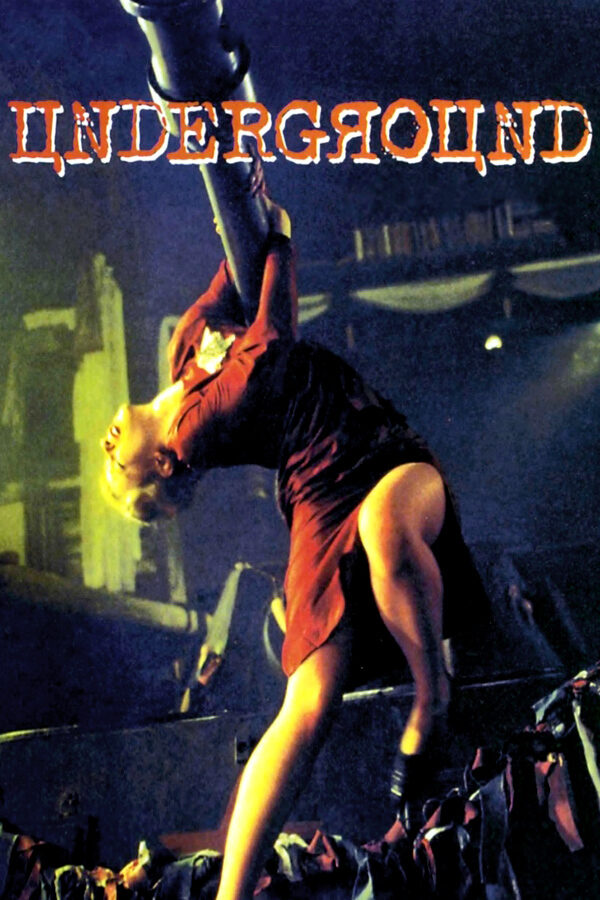

Underground
- Year
- 1995
- Director
- Emir Kusturica
- Genre
- Comedy | Drama | War
I was born in a country where hope, laughter and the joy of living are stronger than anywhere else - and so is evil - you are either the perpetrator or the victim.
When a group of people come out of their cave after several decades and see a war going on, they long to return to their underground lives, convinced that the war never stopped. They were lied to, but now they discover the terrible, humiliating, bloody truth, which is nevertheless the truth.
In the film, the world above ground is shown in the full color of everyday reality. The world below ground we see in the faded theatrical colors of manipulated lies. The two worlds will finally communicate, exchanging their values: decadence and suffering. They laugh at themselves, at us, and finally, when they meet, they laugh at each other.
Shooting of UNDERGROUND began at Barrandov Studios in Prague in October 1993 and wrapped in Belgrade in January 1995. It is the first film Kusturica has made in Yugoslavia since 1988, and it is his dramatic response to what happened in that country during that time. “I live in a country that is burning in a terrible war. I was looking for a story that would somehow answer questions not only about history but also about the people who live there.”
Kusturica found the seed of the story he was looking for in a work Dušan Kovačević had written many years earlier. “Twenty years ago I wrote a play about a man who keeps people locked in a cellar, telling them the war is still going on,” Kovačević recalls. “Only that basic situation remained; we changed everything else. The original idea helped Emir and me write a story not about one family, which is what the original play was about, but about a whole country. We wanted to show people who, generally speaking, know very little about our country how we lived and why this terrible war had to happen.”
UNDERGROUND brings together creative talents from Kusturica’s previous films. The trio behind the camera includes Vilko Filač, composer Goran Bregović and production designer Miljen Kljaković Kreka, who have been part of the team since TIME OF THE GYPSIES. Kusturica describes their teamwork: “The people I work with get involved in a project very early. It becomes an event that grows out of our different experiences. Kreka started drawing as soon as we started working on the screenplay, and his drawings then influenced how the screenplay developed.” Kreka, winner of the César and Felix awards for his work on DELICATESSEN, built 28,650 square meters of sets for UNDERGROUND, including a cellar that over the course of the film expands to the size of a small village. From it branches a network of 32 tunnels connecting all the major cities of Europe. “It was a wonderful job for a production designer,” Kreka explains. “We had to build almost everything, including the exteriors. I was interested in this idea of parallel worlds, one above ground, the other below. It’s a fantastic idea, but I wanted it to look like something that could actually exist.” Kusturica has the last word: “Somehow, consciously or subconsciously, people brought something special to this film. There was a feeling that, because of its story and the way we made it, everyone could bring to this film certain feelings about a country that has disappeared.”
UNDERGROUND is a unique cinematic experience that will forever change the way you listen to lies.
UNDERGROUND is an epic cinematic poem about delusion, allusion and illusion. A European co-production of CIBY 2000, Pandora Film, Komuna, RTS, Tchapline Films and Novo Film, it is the story of Partisan families hiding in a cellar during the Nazi occupation of Belgrade in 1941. With the help of an adventurous profiteer, they manufacture weapons for the resistance. When the war ends, this noble effort carries on, as their benefactor feeds them fictitious reports of German victories in order to keep the underground production going for his own profit. The collaboration becomes even more perverse when he persuades his best friend to hide underground so that he can keep the woman they both love to himself.
Twenty years pass, and during an underground wedding some of the deceived Partisans find a way out into the world above. Even though the year is 1961, they believe the Nazis are still in power, because they stumble upon a film shoot depicting the German occupation of their country. Thirty years later, some of these patriots get caught up in the fighting in Slavonia - 1991…
The originality of UNDERGROUND recalls Alice in Wonderland as reworked by Franz Kafka, or perhaps more accurately, The Trial as reworked by Lewis Carroll. It is a dark love story, colored by the romantic imperatives of greed and betrayal. This infernal vision of endless war is constantly shot through with humor. Humor is the balm Kusturica uses to soothe the wounds of war, but not to heal them. There is no recovery for those who live underground. It is a Falstaffian fantasy sustained by absurdity. The young director here is an anarchic artist who lays bare the mad chaos of war and makes it seem so sadly normal.
One line of dialogue goes: “You lie so beautifully.” This saga spans half a century of Balkan history, during which not one of the characters manages to learn a single useful lesson. This dream within a nightmare looks as if Hieronymus Bosch had been the art director and Francis Bacon the cinematographer. There are traps in every shot. Time is unreliable; not even tears can be trusted. This is, ultimately, Kusturica’s magical allegory in which the seven deadly sins take the place of the cardinal virtues.
UNDERGROUND confirms that film can still be our most powerful art form. It continues the tradition of witty anti-war films such as TO BE OR NOT TO BE and CATCH-22. What is more, it is proof that the Devil, too, has a sense of humor.
UNDERGROUND links the lives of four characters: Marko, a poet and profiteer; his wife Natalija; his best friend Crni, a daring hero of the resistance; and his brother Ivan, a stuttering zookeeper, the only one innocent of the lies, big and small, told over half a century of Balkan turmoil. Kusturica, the dramatic father of these four, says: “They are all liars, except Ivan.”
Miki Manojlović, who plays Marko, comes from the world of theater, as his parents were professional actors. He first went on stage as a child. He studied acting at the Faculty of Dramatic Arts in Belgrade and made his professional debut in 1970, launching a successful career in theater and film. Manojlović first worked with Kusturica in 1985, when he played the lead in WHEN FATHER WAS AWAY ON BUSINESS. His more recent films include Nicole Garcia’s EVERY OTHER WEEKEND with Nathalie Baye, Goran Marković’s TITO AND ME with his UNDERGROUND co-star Lazar Ristovski, Goran Paskaljević’s TIME OF MIRACLES with Mirjana Joković, who also appears in UNDERGROUND, and Goran Paskaljević’s TANGO ARGENTINO. “My character in UNDERGROUND has many different sides,” Manojlović explains. “I play an amalgam of all our Balkan vulgarity. An amalgam of beauty, evil and ingenuity in killing. I play the last 50 years, and I play even more than that - I play our soul.” Manojlović compares the experience of making UNDERGROUND to working with Peter Brook on the Mahabharata: “That is the only similar experience I have had as an actor. But here we went even deeper than with Peter, deeper into the material. It was an unforgettable experience.”
Lazar Ristovski, who plays Crni, is one of Yugoslavia’s leading actors, with 2,000 stage performances and more than 20 films to his name. He also starred in one of the most popular Yugoslav films of the post-communist era, Goran Marković’s TITO AND ME. “In films, I mostly play heroes,” he explains. “But I play them as antiheroes.” The decision to accept the role of Crni in UNDERGROUND was not his alone. “I read every screenplay I get with my wife first, and then we tell the story to our children. Everyone was happy when they heard about this character, so I really had no choice.” Ristovski feels that UNDERGROUND rests on elements that go deeper than the nation’s recent history. “I have the impression that it all happened in some prehistoric period, when good and evil, light and darkness were created, when human beings were born. There were many things that seemed impossible to me when I first read the screenplay. And I am a man who likes to fight for things that seem impossible.”
Mirjana Joković, who plays Natalija, made her stage debut at the National Theater in Belgrade at the age of nine. At sixteen she earned a place at the Faculty of Dramatic Arts, the youngest student of her class. Joković made her screen debut in the lead role of the Argentine-Yugoslav co-production ROAD TO THE SOUTH, and then starred opposite Daniel Day-Lewis in EVERSMILE, NEW JERSEY. For the latter she won the Best Actress award at the San Sebastián Film Festival in 1989. Her more recent films include Predrag Antonijević’s MALA and Peter Sehr’s SERBIAN GIRL, in which she plays the title role, among others. Mirjana Joković currently lives in Los Angeles and returned to Europe to shoot UNDERGROUND. “I don’t think I can talk about this as just a film,” she confides. “Those of us who worked on it will carry it with us forever. This film brought us closer together because of our personal confusion about everything happening in our country, and it forced us to find a language to express our feelings. We took energy from life and put it into the film, and from the film it flowed back into life. The emotional cost was that of ten films. It is all part of the ecstasy built into this film.”
Slavko Štimac, who plays Ivan, has been a film actor since the age of eleven. “In other words, I grew up in films,” he recalls. “Since then I have made 36 or 37 films, mostly in leading roles. It is good for an actor to have that kind of experience of routine work right from childhood. The rest is a matter of personality.” Štimac first worked with Kusturica in 1980, when he played the lead in DO YOU REMEMBER DOLLY BELL? “The main thing Emir does when he directs is keep good relations on set among the people working on the film. He gives you the freedom to bring your own interpretation, and then he makes suggestions or puts forward his own ideas. He has great respect for people, especially for actors.” “UNDERGROUND is a very interesting film, unusual in every way. I play Ivan, the zookeeper, who finds it hard to communicate with people because he stutters. So he turns to animals for friendship. People don’t stutter because they are stupid; strong emotions get them worked up. That is how I wanted to play this role - to play those emotions as truthfully as I could.”
Dušan Kovačević was born in Šabac in 1948 and graduated from the Faculty of Dramatic Arts in Belgrade in 1973. Since then he has written twelve plays and ten screenplays. He considers his greatest creative achievement to be that “for twenty-five years I have managed to make a living as a professional writer.” His plays have been translated into many languages and staged around the world, including, recently, on Broadway (THE PROFESSIONAL). His screenplays for BALKAN SPY (which he also directed), THE MARATHON FAMILY and WHO’S SINGIN’ OVER THERE? won him major awards at international festivals. UNDERGROUND was written as an original screenplay in collaboration with Kusturica, although its roots lie in a much earlier work by Kovačević. “It occurred to me that the story would make a good basis for a film about absolutism, that is, about how one or two people can hold a far greater number of people in their power through endless manipulation. Simply put, it is a film about the ruling technocracy.”
“We tried to follow the changes that took place in the former Yugoslavia over the last few years, when the people who had kept other people in cellars declared themselves democrats and created new cellars. I think this story, told as a black comedy, depicts human relationships that are not rooted in just one country.”
Goran Bregović was born in Sarajevo to a mixed marriage, like so many millions of Yugoslavs. He came a long way, from a café musician at the bus station in Konjic to the leader of the most important rock band, Bijelo Dugme. The invitation to compose the score for TIME OF THE GYPSIES came at a moment when he was searching for a new musical path. His contribution to the film’s success gave him an exceptional start as a film composer. His collaboration with Kusturica continued on ARIZONA DREAM, which brought the composer gold-selling records and definitive international success.
The music in UNDERGROUND is a constant source of energy. The film features an eclectic selection of songs and melodies, from contemporary pop songs to Party anthems, performed by brass bands and Gypsy musicians. Besides highlighting Kusturica’s visual eloquence, the music Bregović created this time brings to life the film’s at times stark loneliness.
Vilko Filač graduated from the Film and TV School of the Academy of Performing Arts at Charles University in Prague. For seven years he taught cinematography at the Film Academy in Ljubljana. He won the award for best cinematography at the Yugoslav Film Festival in 1985. Besides the many films he has shot as director of photography, he also directs documentaries, one of which won the Grand Prix at the Documentary Film Festival in Nice in 1980. Filač has worked on all of Kusturica’s films, from his first television work in 1978 right up to UNDERGROUND. His other recent films include James Keach’s THE FORGOTTEN, Michele Placido’s PUMMARÒ and Ali Özgentürk’s ÇIPLAK.
Miljen Kljaković Kreka has more than 20 years of experience and previously worked with Kusturica on TIME OF THE GYPSIES and ARIZONA DREAM. In 1991 he won the French César and the European Film Award for his work on DELICATESSEN, directed by Jeunet and Caro. Kreka’s enthusiasm for UNDERGROUND began as soon as Kusturica sent him the first draft of the screenplay. “I started making sketches even before the contract to make the film was signed. I said: ‘It doesn’t matter to me whether the film gets made or not, I’ll make the sketches anyway because this project excites me so much.’ Emir gave me a free hand because he trusts what I will do. The two of us know each other well. I know what Emir wants and how Vilko will shoot it, and they know how I think and what I will offer them. There is a strong mutual trust, and that is very important.
Branka Čeperac is the doyenne of Yugoslav film editing. Over her rich career she has worked with many filmmakers and won awards at film festivals in both Yugoslavias. She showed her skill and talent in Vlada Pavlović’s OSEKA and Branko Bauer’s SALAŠ U MALOM RITU.
She had a particularly fruitful collaboration with Srđan Karanović on his projects: the series GRLOM U JAGODE and the films JAGODE U GRLU, PETRIA’S WREATH, SOMETHING IN BETWEEN and A FILM WITH NO NAME, for which she won the Golden Arena for editing at the Pula Film Festival in 1988.
She edited the most-watched Yugoslav film of all time, TESNA KOŽA I by Mića Milošević. She received the first Crystal Prism for film editing from the Yugoslav Film Academy in 1992, as well as the Golden Mimosa at the Herceg Novi Film Festival that same year, for Srđan Dragojević’s WE ARE NOT ANGELS.
Nebojša Lipanović was born in Sarajevo in 1958 to a mixed marriage. He graduated from the Academy of Fine Arts in 1984.
He made his debut on the film STRATEGIJA SVRAKE, directed by Zlatko Lavanić. As assistant costume designer he worked on the following films: ŽIVOT RADNIKA - Miroslav Mandić; ROBINSON CRUSOE - Caleb Deschanel (Yugoslav-American co-production); TIME OF THE GYPSIES - Emir Kusturica.
He was the costume designer on Mladen Mitrović’s HAUSTORCE, Bato Čengić’s THE SILENT GUNPOWDER, Benjamin Filipović’s HOLIDAY IN SARAJEVO, Vuk Janjić’s PSALM and Emir Kusturica’s UNDERGROUND.
Of his work with Kusturica and the rest of the crew, he says: “I have the impression that we worked in Verrocchio’s workshop, filmed Chagall, experienced Veronica Messina.” And also… “I have known Vilko Filač for a long time, and God grant that I never truly get to know Emir Kusturica.
Supporting cast
- FrancErnest Stoetzner
- JovanSrđan Todorović
- VeraMirjana Karanović
- JelenaMilena Pavlović
- GrandpaBata Stojković
- GolubBora Todorović
- BataDavor Dujmović
- Falling GypsyDr. Nele Karajlić
- MustafaBranislav Lečić
- Film directorDragan Nikolić
- JanezErol Kadić
- TomislavPredrag Zagorac
- Dr StrasseHark Bohm
- Dr MirkovicPetar Kralj
- DealerEmir Kusturica
- Russian driverPierre Spengler
- CaptainBranko Cvejić
- Police inspectorJosif Tatić
- Fat womanZdena Hurtečakova
- Script supervisorTanja Kecman
- Girl from the tunnelAlbena Stavreva
- Whispering womanElizabeta Đorevska
- OfficerPiter Mauntain
- Investigator IMirsad Tuka
- Investigator IIBatica Nikolić
- Woman in the theater boxDesa Biogradlija
- Partisan IZoran Miljković
- Partisan IIDušan Rokvić
- CommandoRadovan Marković
- Assistant directorMiodrag Đorđević
- ProstituteLjiljana Jovanović
- Dancer on the shipDanica Zdravić
- Driver in the tunnelStojan Sotirov
- Gypsy bandSlobodan Salijević Orchestra
- Gypsy band in the caféBoban Marković Orchestra
- ČarliSoni
Underground
Film and TV production
-
 Barking on the stars
1998
-
 A lullabby for soldiers
-
 Dara from Jasenovac
2021
-
 Some New Kids
2003
-
 Foxy Ladies
-
 And now adio
-
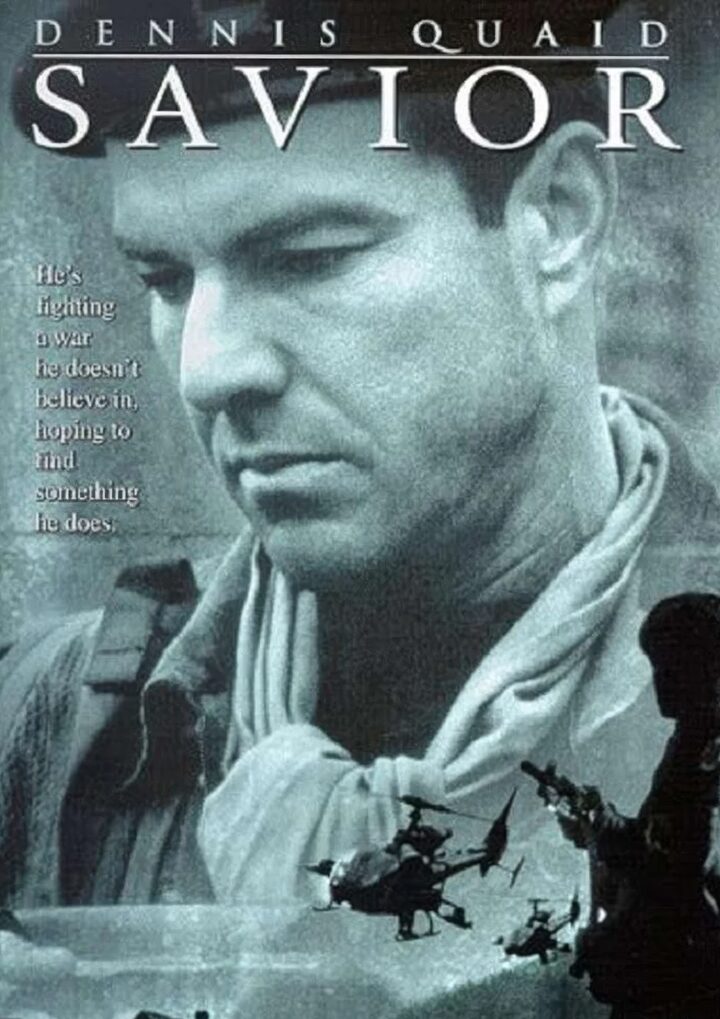 Savior
1998
-
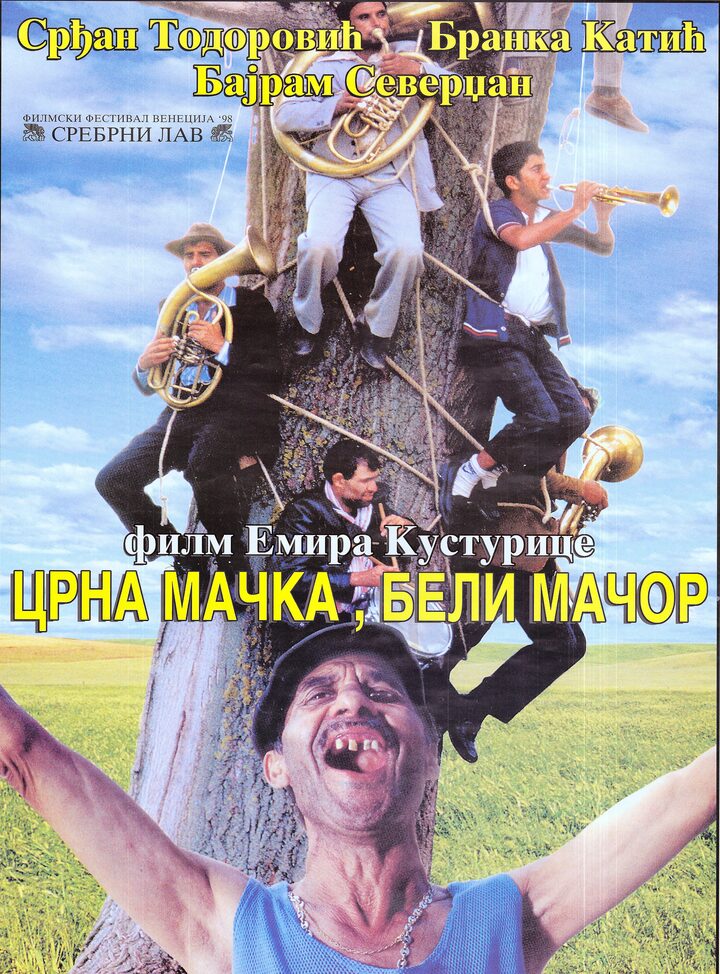 Black Cat, White Cat
1998
-
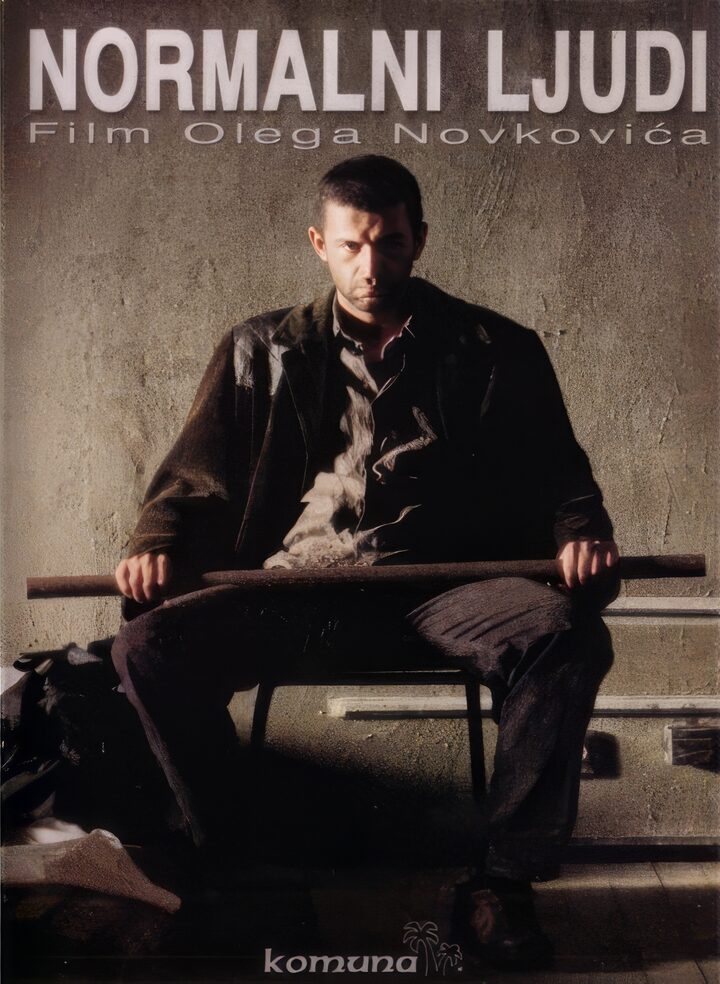 Normal People
2000
-
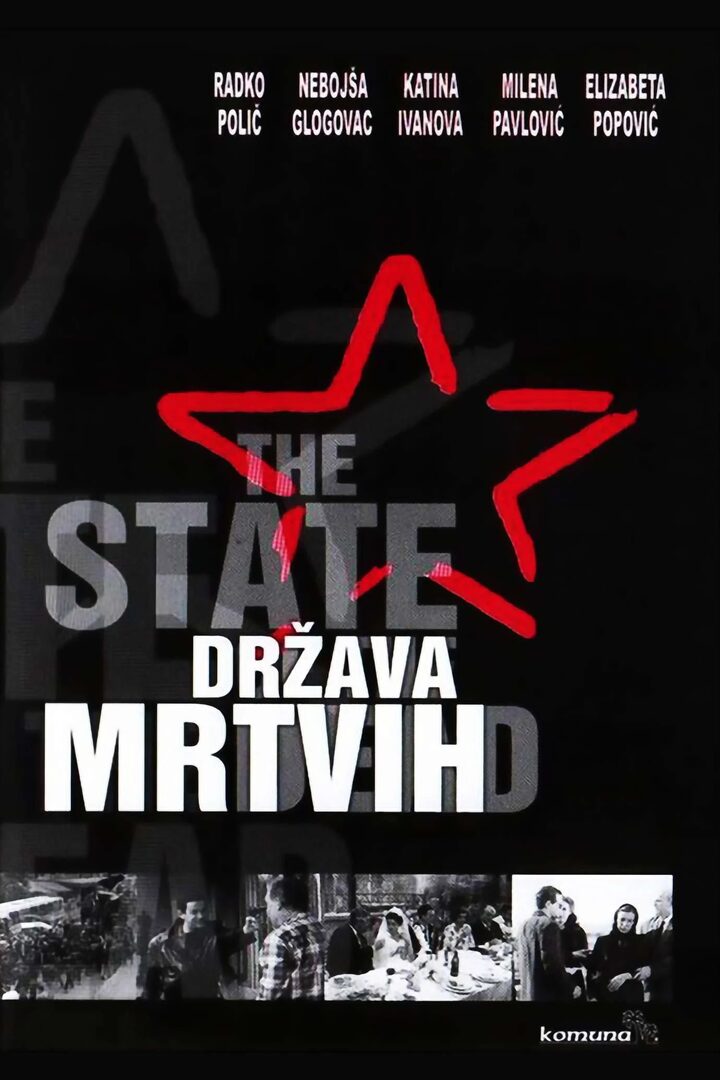 The State of the Dead
-
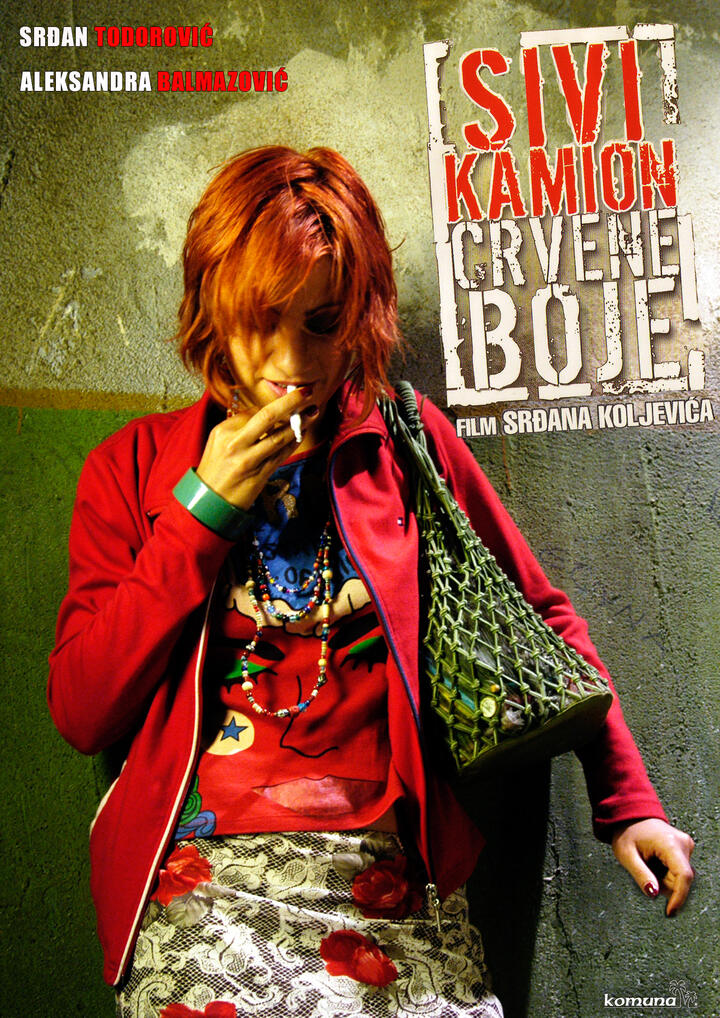 The Red Colored Grey Truck
1991
-
 Svaštara Duška Radovića
1990
-
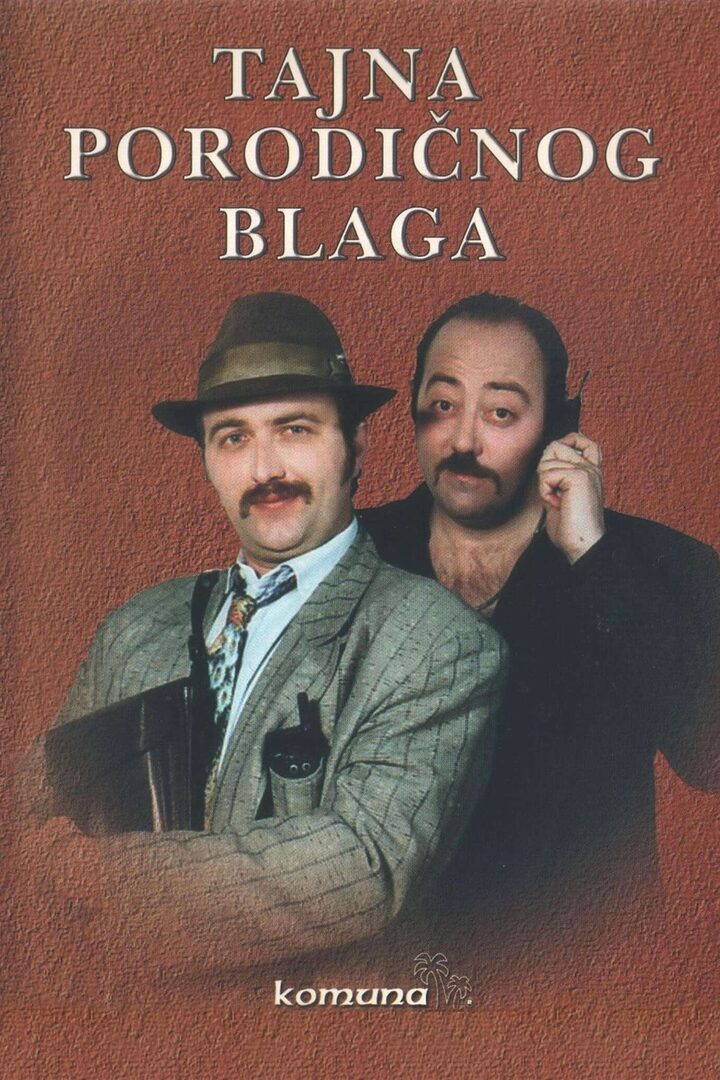 Tajna porodičnog blaga
01 / 10
Underground